Life Is Full of Important Choices Golf – Honest Review
Design File First Impressions
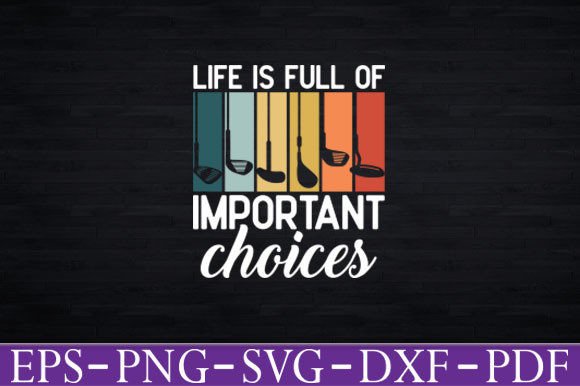
When the Life Is Full of Important Choices Golf graphic landed on my screen, I immediately understood its appeal for the handmade and embroidery community. The design brings a relaxed, vintage humor that feels less like a trendy meme and more like a timeless conversation starter. It leans into a slightly worn, old-school typography and a simple golf motif, creating a mood that fits right into weekend casual wear, gifts for golf lovers, and slow-stitch projects that celebrate sarcastic life mottos.
As a designer who converts graphics into stitch-ready files, I first evaluate how the visual personality translates when thread replaces ink. With Life Is Full of Important Choices Golf, the bold lettering promises clear satin-stitch potential, and the supporting elements — a golf ball, a club, or a subtle retro badge shape, depending on the exact variant — feel intentional rather than cluttered. This is critical because embroidery demands breathing room; overcrowded designs become muddy on fabric.
The mood is playful, self-aware, and slightly rebellious. You can already picture it on a faded heather-gray sweatshirt at a charity golf tournament, or stitched onto a canvas tote bag that holds a few beers and a change of shoes. That kind of instant “where would I wear this?” clarity is a green flag for any digital design asset.
Visual Structure and Embroidery Logic
Examining the layout, Life Is Full of Important Choices Golf uses a balanced composition that many embroidery digitizers will appreciate. The text dominates the space with a clear hierarchy, while the golf icon sits either beside or beneath the phrase, acting as a visual anchor. For machine embroidery, this structure translates well into a single hooping session, as long as the overall dimensions stay within a manageable size — I’d guess a 4x4 or 5x7 hoop would hold this comfortably on most home machines if the file is digitized at an appropriate stitch count.
The vintage feel suggests imperfect edges, slight distress, or a stippled texture in the original art. In the Graphics file (delivered as SVG, PNG, DXF, PDF, and EPS), that distressed look is charming. For embroidery, depending on your digitizing approach, you can either preserve that texture through broken satin stitches and irregular fill patterns, or smooth it into a cleaner classic patch style. Both translate well on denim jackets, structured caps, and kitchen towels. I’ve done similar conversions with distressed painted-look designs, and when you match thread colors to the vintage palette — dusty navy, muted mustard, faded brick — the final stitch-out feels authentically worn-in.
Real-World Embroidery Applications
I mentally mock up designs on various substrates before committing thread to fabric. Life Is Full of Important Choices Golf excels in specific product categories that small business owners and Etsy sellers gravitate toward:
- Custom apparel: Sweatshirts and unisex t-shirts are obvious choices. A center-chest placement about 3 to 4 inches wide creates a clean, boutique look without overwhelming the garment.
- Tote bags and canvas carryalls: One recent project involved a set of custom embroidered totes for a golf outing — this design would have been a perfect fit, placed slightly above the center with a solid backing stabilizer to support the dense lettering.
- Embroidered patches: The self-contained layout makes patch conversion straightforward. Add a merrow-style border, and you’ve got a sew-on accessory for caps, jacket sleeves, or caddie towels.
- Aprons and kitchen textiles: The humor lands well in casual kitchen settings. A half-apron with this design angled near the hip pocket feels fun and giftable for the golf-and-grill crowd.
- Pillow covers and home décor: For boutique home accents, a 7-inch version on a lumbar pillow cover in linen or cotton duck fabric would sit beautifully in a man cave or sunroom.
- Baby items and playful gifts: On a soft onesie or a tiny bib (with reduced size and simplified fill), the saying takes on an adorable, tongue-in-cheek gift quality — though you’ll want to test digitizing for thin, stretchy fabrics separately.
Throughout these applications, the design’s strength lies in its readability. Even when stitched at smaller sizes — say, 2.5 inches wide for a cap front — the lettering holds up if the digitizer adjusts pull compensation and underlay correctly. With T-Shirt Designs like this that lean heavily on text, stitch density around narrow letter openings (like the loops in “g” and “a”) can make or break the finished look.
Where You Should Use Caution
No design works perfectly everywhere, and Life Is Full of Important Choices Golf comes with sensible limitations. From practical stitching experience, here’s where extra care is non-negotiable:
- Small hoop sizes: Attempting to cram this into a 4x4 hoop without reducing detail will punish you with tiny, overstitched text. If your digitized file pushes the design under 2.5 inches wide, test stitch the smallest lettering first.
- Stretchy, thin fabrics: On slub cotton tees or performance polos, the combination of dense fill and stretch can cause puckering. I use a sharp, lightweight cutaway stabilizer and a topping film to keep the lettering crisp.
- Dark fabrics: The vintage muted tones can recede into black or navy backgrounds. Consider a white or cream base fabric, or adjust thread colors to lighter, higher-contrast tones if going dark.
- Curved surfaces like caps: Domes require careful digitizing adjustments — arch the text subtly to follow the cap curve, or accept a flat-left-to-right placement that may wrap a bit at the edges. I’ve had better luck with mid-profile cap fronts and a structured foam backing.
- Layered garments: Hoodie pouch pockets, seams, and double-layered shoulders can cause skipped stitches. Always hoop carefully, avoiding seams, or adjust placement to a smoother area.
These considerations are not flaws — they’re the kind of honest shop-floor wisdom that separates a professional finished product from a wavy, frustrated stitch-out. When you sell on Etsy or at craft fairs, customers notice the difference immediately.
A Real-Life Project: The Golf-Themed Gift Tote
Last month, a client asked me to prepare a set of custom embroidered canvas totes for her husband’s 50th birthday golf trip. The brief: something funny, a little nostalgic, and not the generic “Golf Dad” stuff. I sourced several digital design assets, and Life Is Full of Important Choices Golf stood out for its vintage personality.
After testing a digitized version on a scrap of medium-weight cotton duck, I adjusted the stitch angle on the text to run diagonal across the letters, reducing pull and giving a nice light reflection. The golf ball element, originally a somewhat sketchy line drawing in the Graphics file, I converted to a smooth satin stitch with a subtle outline, keeping the overall look clean and durable. The tote bag was a natural 12-ounce canvas, pre-washed, hooped with a heavy cutaway stabilizer.
Three tote bags later, the reaction was exactly what I hoped. The birthday group loved the design — it felt personal, conversational, and entirely unhurried, like something bought at a little pro-shop many years ago. One of the guys even asked if I could do a patch version for his caddie towel. That kind of organic product spin-off is the clearest signal that a design asset has commercial legs.
Practical Embroidery Designer Notes
Before you add Life Is Full of Important Choices Golf to your production lineup or convert it into an embroidery file for client projects, here are the habits I practice that make all the difference:
- Test on scrap fabric first. I can’t overstate this. Run a full stitch-out on the exact fabric and stabilizer combination you intend to use. One test square saves a ruined $30 blank sweatshirt.
- Check thread color contrast. On light oatmeal or cream fabric, the vintage palette shines. On charcoal, the muted colors may get lost. For dark substrates, I often lighten the palette by 20% or add an satin-stitch outline in off-white to create a subtle framing.
- Review stitch density. If you’re digitizing from the provided SVG, PNG, DXF, PDF, or EPS crafts cutting files, remember that a graphic doesn’t translate 1:1 into stitches. Over-dense areas cause thread breaks. Start with a density of 0.4mm for fills and adjust based on your thread weight and machine tension.
- Confirm hoop size. Measure the full design including any “jump” margin. Know your machine’s max field. For most single-needle machines, a 5x7 hoop is a safe bet.
- Inspect small details before production. Tiny hollows in letters like “e” and “a” can close up. Use a minimum of 0.8mm spacing for those open areas, or switch to a running stitch for the very finest lines.
- Test in black-and-white mockup. A smartphone photo converted to grayscale helps you see contrast and legibility issues that color hides.
- Compare light and dark fabric backgrounds. This design’s charm shifts dramatically. On natural linen, it feels heirloom; on bright white, it can look stark. Pick the vibe you want.
- Use proper stabilizer for the fabric type. For tote bags, heavy cutaway. For sweatshirts, a medium cutaway and a water-soluble topper. For baby onesies, a soft, fusible no-show mesh prevents skin irritation.
- Check licensing for commercial embroidery. The product is described as an instant download of cutting files. Before you digitize and sell finished items embroidered with this design, verify whether the commercial license permits that use. Many Graphics bundles allow personal use but require an extended license for products you sell. Etsy sellers, especially, need to be clear on this.
How Buyers and Gift Recipients Respond
A design’s real test happens when a customer opens the package. Life Is Full of Important Choices Golf tends to prompt laughter and an immediate “That’s so true” reaction. The humor is broad enough to appeal to both casual golfers and those who’ve never set foot on a green but appreciate the life lesson wrapped in the joke.
For craft business owners, that reaction translates into higher giftability. Customers buy this for their partners, their dads, their golf buddies, even as a retirement gag. The vintage typography keeps it from looking cheap; the stitching, when done correctly, adds a tactile quality that a screen print can’t match. It feels more substantial, which raises the perceived value of your handmade product.
I’ve also noticed that designs like this perform well as “add-on” items at craft fairs. A $25 embroidered tote or a $15 patch turns into an impulse buy alongside larger, more complex work. Keep a few pre-stitched versions on hand, and watch how often people pick them up with a grin.
Consistency Across Branding and Product Lines
If you’re building a cohesive shop identity around funny vintage-style embroidery, Life Is Full of Important Choices Golf slides in seamlessly alongside other retro sayings, sports humor, or sarcastic life advice. Use similar thread palettes, consistent placement rules, and comparable digitizing techniques to create a recognizable “look.” When customers see your Etsy shop thumbnail grid, they’ll start to recognize your style — and that builds repeat business.
One additional tip: the design lends itself well to printable mockups and digital product previews. Because you already have multiple file formats in the download, you can easily place the graphic onto a t-shirt mockup for a product listing photo, then note that the actual item is embroidered. This close preview alignment reduces confusion and increases buyer confidence.
Final Thoughts on the Design’s Long-Term Value
As a working embroidery designer, I’m selective about the digital assets I bring into my production workflow. Life Is Full of Important Choices Golf earns its keep because it solves a specific, recurring demand: funny, vintage, lightly sarcastic golf-themed products that don’t feel like mass-market junk. It digitizes cleanly, adapts well to patches and apparel, and looks as comfortable on a bar towel as it does on a 100% cotton hoodie.
If you treat it with the practical care outlined above — proper stabilizer, color contrast checks, density adjustment, and a thoughtful application choice — you’ll end up with a finished product that feels both personal and professional. That’s the sweet spot where handmade craft turns into a memorable purchase, and it’s exactly where small embroidery businesses thrive.