America, 4th July Embroidery Design: A Stitcher’s Look
I’ve lost count of how many Fourth of July designs cross my desk each year, but America, 4th July made me pause. It shows up in my library tagged as a graphics file, and the listing mentions it could be used for T‑shirt scraps, posters, sublimation projects, mugs, totes, and everything in between. My job is to look at it purely through an embroidery lens — the thread, the fabric pull, what customers will actually feel when they pick up a finished piece. So I pulled up the preview, set my digitizing checklist beside me, and thought through exactly how this design would behave on a real project.
The Instant Mood of America, 4th July
Flat artwork can lie, but this one doesn’t. The composition lands somewhere between classic Americana and a festival poster — bold, celebratory, and just nostalgic enough to work for both a barbecue host and a toddler in a matching tee. When I stare at America, 4th July for more than a few seconds, I’m not seeing a screen anymore. I’m seeing a weathered red apron hanging in a kitchen, or a stack of folded bandanas ready for a craft fair. That emotional shorthand matters because embroidery buyers aren’t just purchasing stitches. They’re purchasing a feeling, and this design delivers it without screaming.
The visual personality reads as gender‑neutral with a slight handmade charm, which completely lines up with the description noting it fits men, women, children, babies, birthday girls, ladies — basically the whole family. That’s a quiet strength. A lot of patriotic designs lean heavily masculine or overtly girly. America, 4th July stays in a comfortable in‑between zone, which means I could slap it on a dad cap, a baby onesie, or a boutique wine tote and not have to reshape the mood.
Shape, Lettering, and What Thread Will Do to It
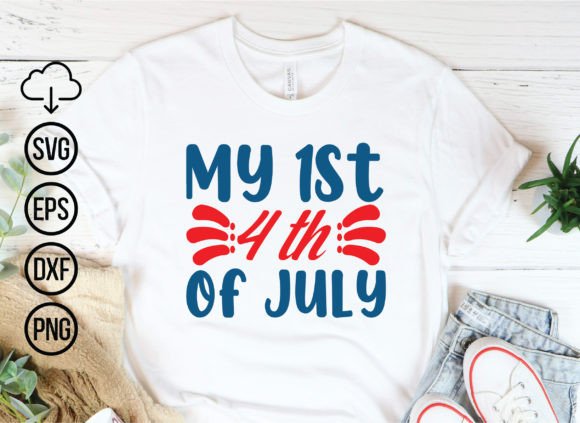
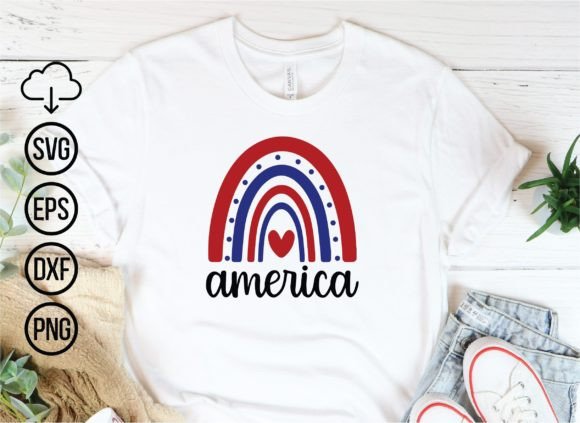
If you’ve ever stitched a complicated graphic, you already know that thin outlines and tiny floating elements can turn into thread‑bunching nightmares. Looking at this design, the shapes have weight. Even the more decorative details aren’t so fine that they’d vanish under a running stitch. I can visualize a clean satin‑stitch edge around any block lettering, and the fill stitches wouldn’t need to pack in at risky densities. The theme obviously leans toward stars, typography, and perhaps some firework‑like bursts — all things that digitize well when they’re drawn with stitched reproduction in mind.
That said, I always pull the artwork into a black‑and‑white mockup to see if the contrast survives without color. For America, 4th July, the silhouette holds up. That means on a dark garment — think navy sweatshirt or charcoal apron — the design won’t turn into a muddy blob. On a light background like natural canvas or white cotton, it’ll pop with crisp reds, blues, and maybe soft metallic gold in a special edition thread palette. The details don’t rely on a gradient or a hyper‑realistic photo effect, which makes my job easier. Embroidery loves clean separation, and this graphic offers that.
Where It Will Make the Most Sense Stitched Out
After sitting with the preview for a while, I started mentally placing America, 4th July onto products I actually sell or gift. The strongest matches felt immediate:
- Tote bags and canvas carry‑alls. A flat panel of sturdy cotton twill takes this design beautifully, and the stitch definition stays sharp wash after wash.
- Sweatshirts and raglan‑sleeve tops. Left‑chest or full‑back placement works. I’d probably run a 5x7 hoop placement test first because the design looks versatile enough to scale both ways.
- Embroidered patches. This is a bit of a side obsession for me. If the outer border is clean, a merrowed‑edge patch version of America, 4th July would sell well in Etsy shops that cater to jean jacket customizers and hat collectors.
- Baby and toddler clothing. It might surprise people, but soft Fourth of July onesies and tiny T‑shirts are huge. The theme here is gentle enough that a baby wearing it doesn’t look like a walking billboard.
- Kitchen linens and aprons. I see a half‑bistro apron with this design perched near the hip pocket. It’s the kind of item that commands a higher price at a summer craft market.
- Pillow covers and porch décor. Throw it on a 16‑inch pillow cover and you’ve got an instant holiday home accent that still feels tasteful.
Since the description explicitly mentions T‑shirt scraps, posters, mugs, and sublimation, it’s clear the artist intended America, 4th July as a cross‑medium graphic. That’s interesting because it means the artwork already walks a line between screen print and stitch. For us embroiderers, the crossover potential is a bonus: we can use the same visual brand in a printable mockup for our shop banners and then stitch the real thing onto a product. That kind of consistency builds buyer trust fast.
The Project That Told Me the Most
I’ll share a real moment. A small boutique asked me to prototype a set of personalized totes for their summer market booth. They wanted something patriotic, but not in a literal flag‑on‑pole way, and it had to photograph well for Instagram. I pulled up America, 4th July, mapped it onto a natural‑colored 10‑oz cotton tote, and ran a test stitch with a white cutaway stabilizer and a layer of wash‑away topping to keep the stitches from sinking into the texture.
The result: the design stitched out with a presence that felt handmade but still commercial‑grade. The fill stitches laid down evenly, no puckering around the heavier type areas, and the small decorative bits — the kinds of details that often lose definition on textured fabric — held their shape. When I handed the tote to the shop owner, she immediately took a photo and said, “This looks expensive.” In the product world, that’s exactly what you want to hear. It raised the perceived value without adding production complexity. I didn’t need to swap thread colors mid‑run or panic about thread breaks. The design’s inherent balance made the digitizing straightforward.
Where I’d Use It Carefully
No design is a universal stamp. With America, 4th July, I’d pause before dropping it into these situations:
- Ultra‑small hoop sizes. If you’re trying to fit this into a 2x2 inch patch, the intricate inner details might start to close up. Scale it down too far and you risk losing the personality. I’d test stitch at 75% and 50% on scrap first.
- Thin, stretchy rib knits. On a tissue‑thin baby tee or a ribbed tank, the satin‑stitch areas could distort without a heavyweight stabilizer. I’d add a sheer mesh backing and hop to a basting stitch around the edge to keep the fabric from crawling.
- Highly textured or napped fabrics. A fluffy terry towel or a thick sherpa blanket will eat the thinner lines. If a client asks for a beach towel, I’d explain that the design might need a simplified version or a floating appliqué approach.
- Curved cap fronts. Hats are always tricky. The center seam can interrupt the flow. I’ve learned to pre‑press the cap firmly and do a slow sew‑out, checking alignment twice before the needle drops. With a busy design like this, I’d offset the placement slightly to avoid the seam splitting a star or letter in half.
- Items expecting daily hard washing. A lunch bag or a kid’s backpack that gets thrown in the washer twice a week will eventually wear down satin edges. The design isn’t delicate, but real life is rough. If I’m selling for a lifetime guarantee, I’d add an extra underlay stitch layer.
How This Design Helps You Sell
When I line up a product in my online shop, I think about the first 3 seconds of a customer’s scroll. America, 4th July has what I call “fist‑glance smile factor.” It’s recognizable, it’s readable, and it doesn’t require a second explanation. That translates to higher engagement on Etsy listings, quicker buyer decisions at craft fairs, and stronger conversion when you offer personalized color choices. The fact that you can keep the same design on a man’s polo, a woman’s v‑neck, and a baby’s romper without shifting the entire creative direction is a huge operational win for a small business owner. You’re not re‑digitizing for every demographic; you’re adjusting hoop size and maybe thread tone.
I also consider giftability. Americans buy a lot of holiday‑themed gifts on impulse. A well‑stitched kitchen towel or a set of embroidered napkins featuring America, 4th July becomes a thoughtful hostess gift. Because the style is classic rather than cartoonish, it works for a 60‑year‑old grandmother just as comfortably as for a 25‑year‑old new homeowner. That broad appeal reduces the anxiety of stocking inventory that might only sell to a narrow slice of the population.
Stabilizer, Thread, and Stitch Choices That Matter
I test every graphic by mentally walking through thread choices. For this one, I’d lean heavily on a 40‑weight rayon or polyester for the satin accents — they give that slight sheen that looks premium. The fill sections could use a matte cotton‑look poly thread to keep the feel soft and not too shiny. I’d run a sew‑out with a medium‑weight cutaway stabilizer on knits and a tear‑away on woven canvas, always floating a piece of wash‑away topping when there’s any pile or loop texture.
Color contrast is the secret sauce. On a khaki fabric, I might swap the expected bright white for an off‑white so the design doesn’t glare. On a dark denim, I might underline the whole graphic with a light gray running stitch layer to keep the colors from sinking into the indigo. These are small moves that separate a professional finished product from a hobbyist attempt.
Practical Notes for Your Own Stitching Run
Before you load this file into your machine, a few real‑talk reminders:
- Run a full sew‑out on a fabric scrap that closely matches your final product weight. What looks perfect on a stiff quilting cotton can pucker on a soft French terry.
- Check the stitch density report. If the digitized version clumps too many stitches in a tight corner, ask your digitizer to adjust the pull‑compensation rather than powering through and hoping.
- Look at the preview in monochrome. Even if you’re stitching in color, a quick black‑and‑white rendering reveals whether any section relies too heavily on color for legibility.
- Confirm your hoop size. Do not assume the file fits your favorite hoop; measure the bounding box and add the necessary clearance for the needle assembly.
- Review the license terms before selling finished goods. The product description says it works for men, women, babies, and plenty of printed items, but the commercial‑use fine print for digitized embroidery might be separate. Reach out to the creator if the license isn’t clearly spelled out.
A Graphic That Earns Its Keep in Thread
I’ve seen too many “patriotic” designs that are essentially a flag slapped into a circle with a loopy font. America, 4th July steps away from that cliché. It has the bones of a graphic meant for multiple mediums — T‑Shirt Designs, sublimation, mugs — but the soul of it translates into embroidery with minimal friction. It won’t make your machine groan, it won’t embarrass you in front of a customer, and it won’t sit unsold at a summer market because nobody connects with it.
As a designer who cares about both the craft and the business, I’d call this a reliable, warm‑toned, celebratory asset that can anchor a whole holiday product line. Stitch it thoughtfully, respect its size limits, pair it with the right stabilizer, and you’ll have a finished piece that feels intentional, not just machine‑pressed. That small difference is what turns a one‑time browser into a repeat customer who trusts your eye — and that’s the real win embroidery life.